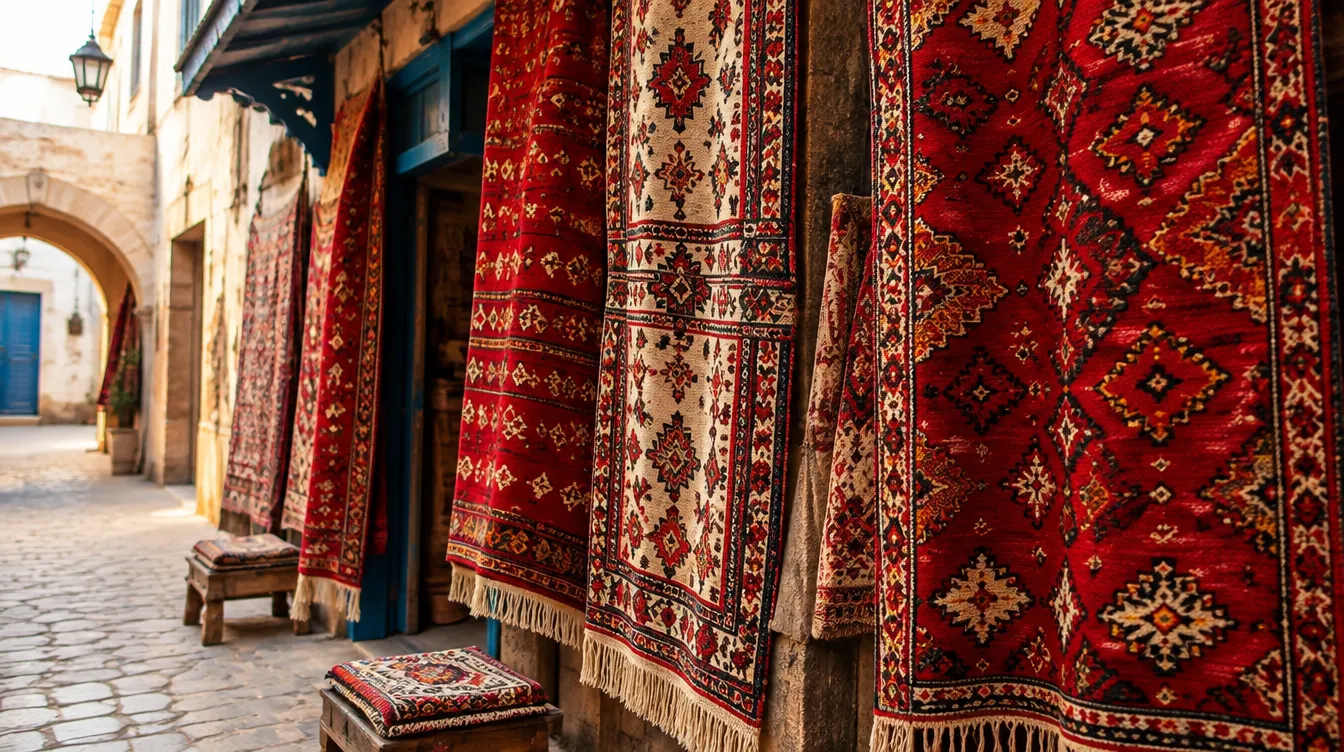
Kairouan is Tunisia’s best-known carpet city, and a hand-made carpet is a lasting souvenir. Prices vary widely, so a little knowledge protects you. For the story behind the craft, read our Kairouan carpets guide.
Common types
- Knotted wool carpets (often called zarbia): thick pile, traditional patterns and bold colours.
- Alloucha: carpets with a long, soft pile, often in natural wool tones.
- Flat-woven pieces such as mergoum: lighter, with geometric patterns, good for walls or travel.
Names and descriptions differ between sellers, so ask for explanations and compare.
Checking quality
- Material: pure wool feels warm and springy; synthetic fibres feel smooth and slippery. A seller should let you check the fibre.
- Back of the carpet: a hand-made carpet shows clear knots and a neat pattern on the reverse.
- Colour: look for even colour, with no bleeding. Natural dyes are more subtle.
- Official label: ask whether the piece carries a craft-office quality label, and for a receipt.
Prices
Price depends on size, knot density, materials and how much time the piece took. We do not quote figures, because they change. Visit two or three shops and workshops, ask for the price per size, and bargain politely. Be wary of a price that seems too good to be true for a “hand-made” piece.
Shipping and customs
- Ask the shop about packing, and about international shipping and insurance.
- Keep your receipt, as it may be needed at the airport.
Next steps
Combine a visit to a workshop with the medina walk. See our visitor tips for money and bargaining advice.
Draft content: verify terminology and add workshop names and prices before publishing.